Writing

nowledge is power. Reading is empowering. In between these two is writing, which organizes knowledge for comprehension. Writing requires talent. The abilities to communicate thoughts in writing and speech are learned arts. The mindset contributes to your ability to create. I have purchased many resources to improve the quality of my writing and to reduce my time creating content. I have found them ALL to be defective. They did not have the quality or the writing style I appreciated. What was interesting was what the authors considered suitable for internet readers. I did a lot of revising on some and discarded most. Artificial intelligence applications help people write quickly. Unfortunately, unless users revise in their voice or use apps that write from the beginning in their voice, the content appears sterile, missiing the mind and heart of the customer.
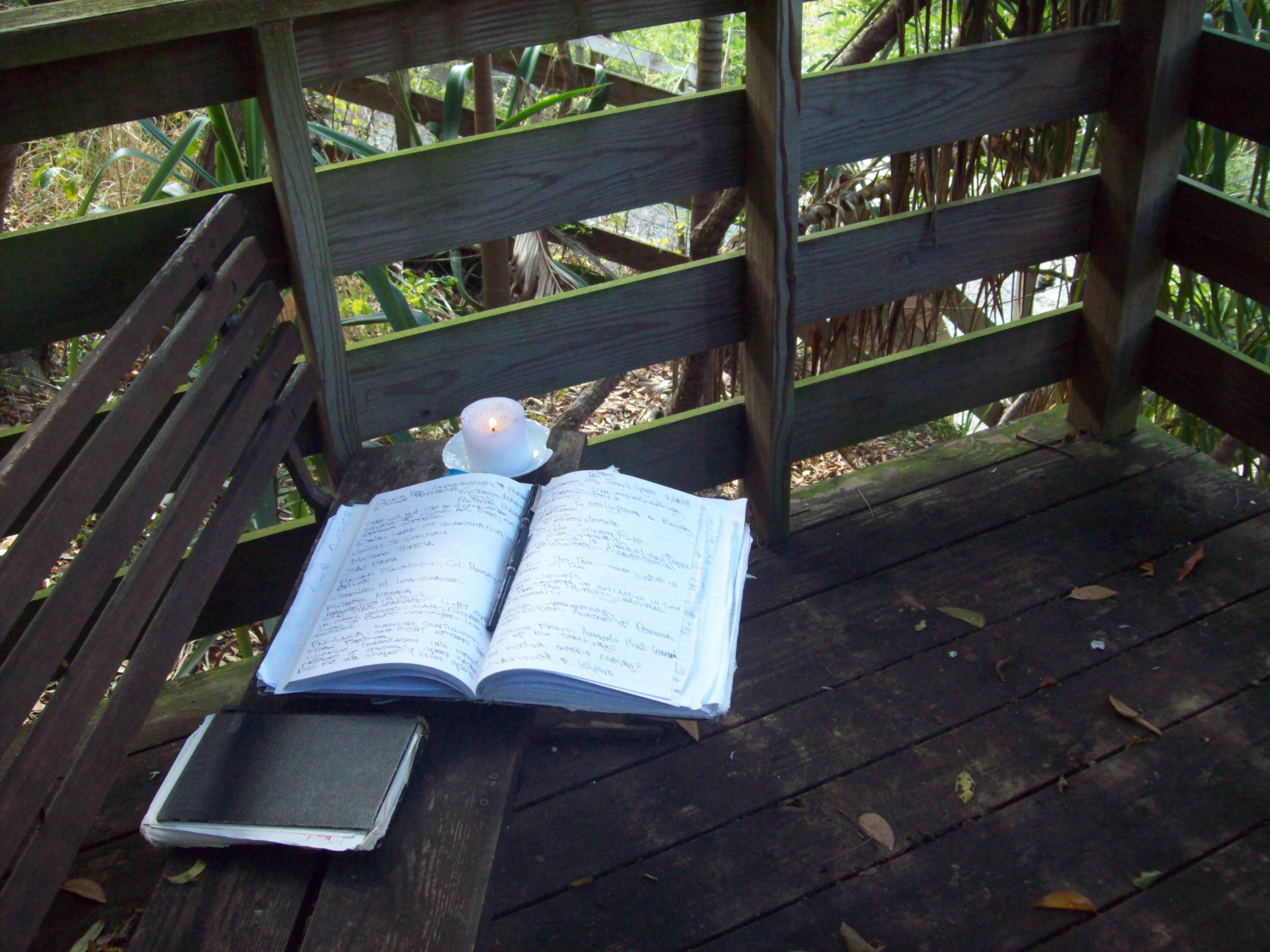
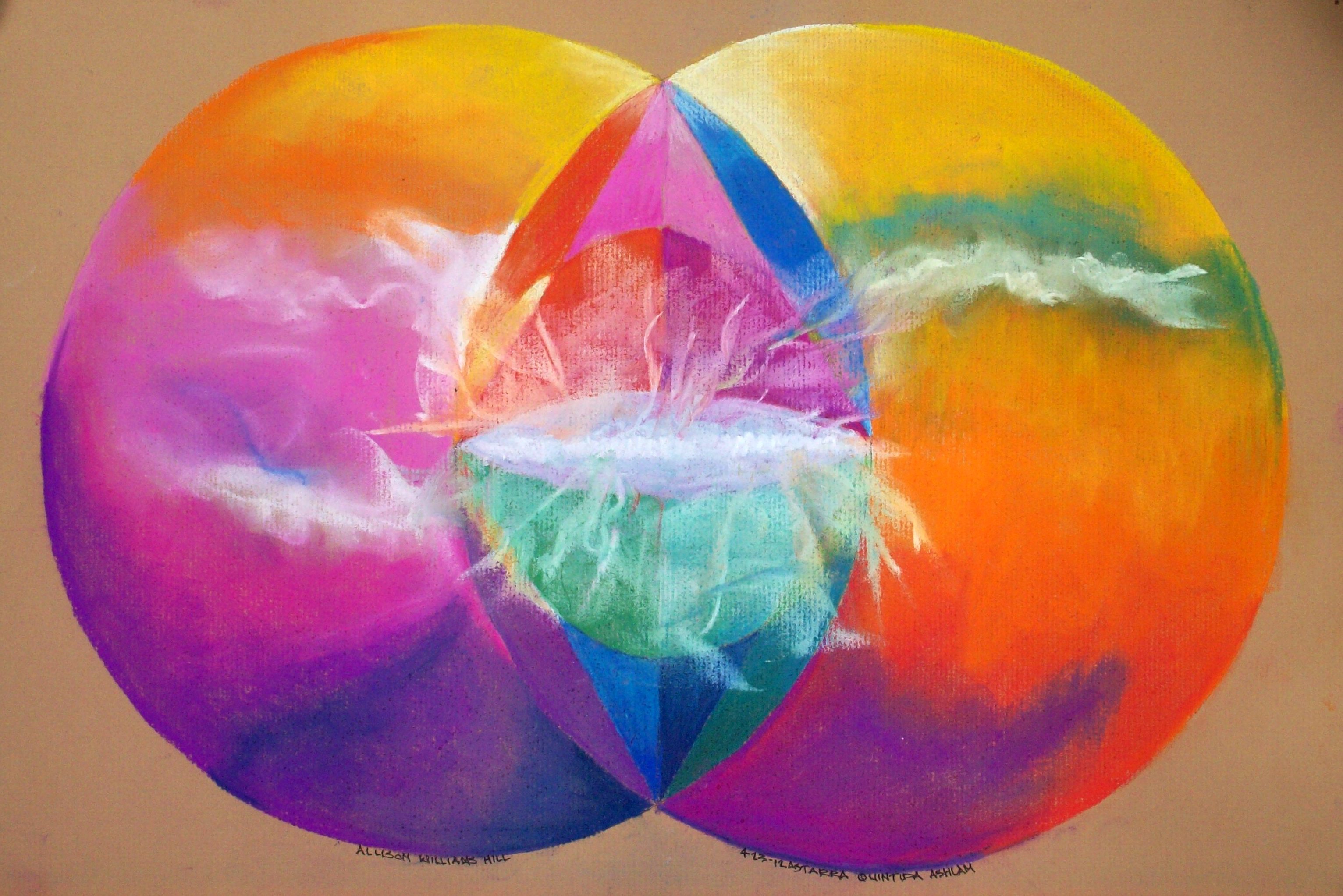
Gazebo - Hill Residence by Allison Williams Hill
Article Writing
Article writing is essentially an editorial or a commentary you are assuming someone wants to read. You get that accomplished by attracting the reader after having researched what he or she would like to know more about. When we want to say something we think is important enough to tell others, the listeners or readers become receptive when the message makes sense. If you attract them, keep their interest, they may want to read more of your articles and learn more about you. There is always the chance of losing the person’s attention when the message does not make sense because of disorganization or poor use of words. The message must be well developed and concise.

Getting into a Writing Mood
We begin with the alphabet, defined as “the letters of a language arranged in a customary order.” The alphabet is a modular system. Each symbol has a sound alone or in combination with others. Words are larger modules composed of symbols or smaller components.
Putting words into images in the reader’s mind is an art. You build on words, which grow into sentences, and then into paragraphs. These are connected to created sentences, then paragraphs, and then compositions. All of these constructs are organized around a theme. The capacity to exploit such talent to generate engaging content is within many, including you. The result is a memorable piece of writing that resonates with the reader. Begin small and build from there.
Be creative in how you write to attract readers. Read what other article writers are using. However, this is not encouragement to use what they do. A concept that you glean from another’s writing may work for you. Do your best to be original. Adapt the concept but use original content. Be personal and personable. In that, you will find your own voice where your creative process will emerge. It takes time, but originality is something that is valuable and valued.
At times you may have difficulty figuring out what to write about or maintaining the flow in which the article develops. Here are some suggestions that may help:
1) Keep Notes, a Diary or a Journal
Ideas can be triggered by what you may hear, see, or smell externally and how those things made you feel internally. Your senses can help you find great ideas. Keep notes of your ideas or thoughts. Attempt to collect them and transfer them to a medium that is easily accessible- like a notebook or your laptop.
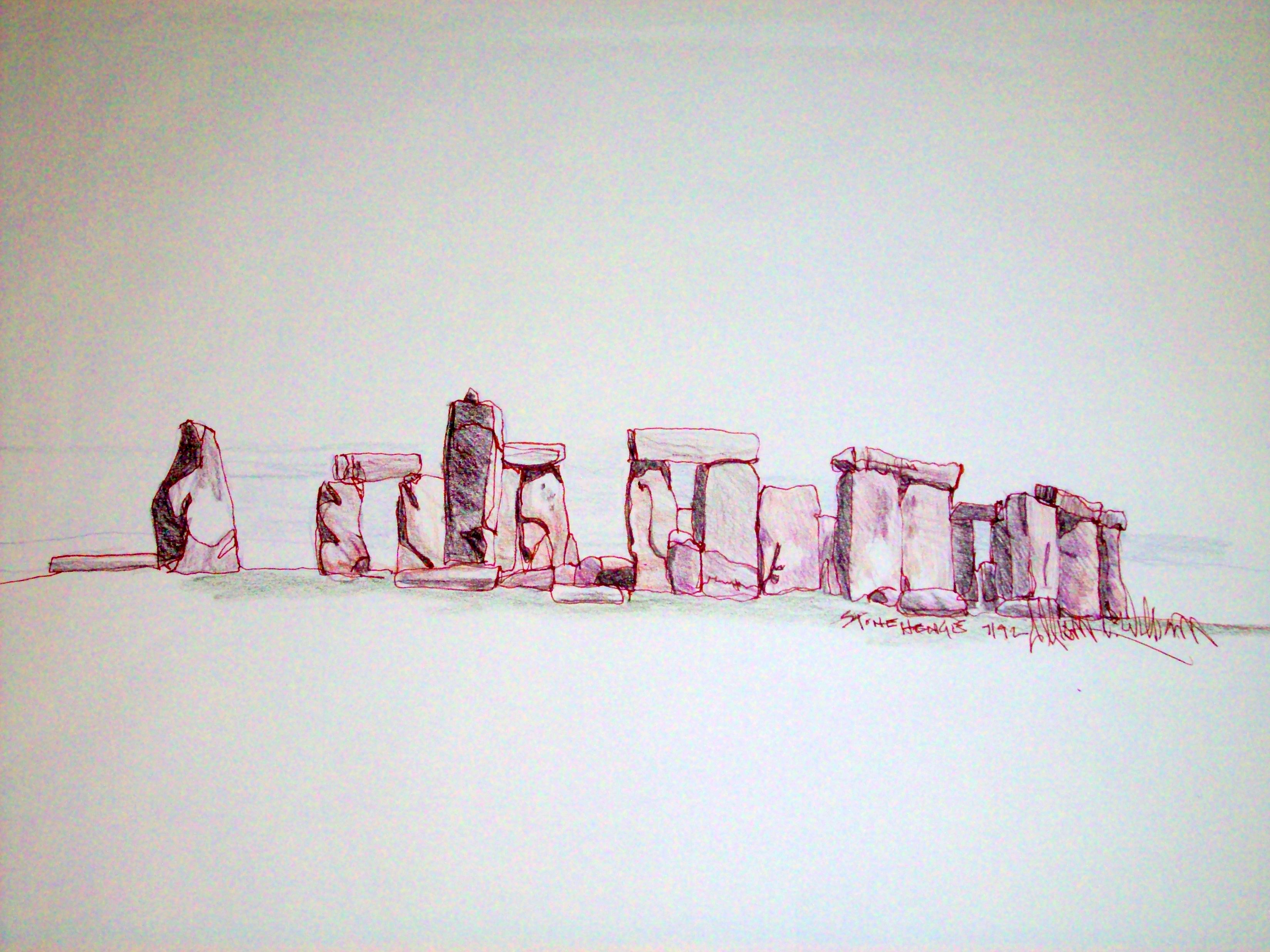
Stonehenge Rendered Sketch by Allison L. Williams Hill
Write your experiences in a journal. Another good reason for maintaining a journal is for collecting your feelings and thoughts as a way of self-discovery. Include what you had read or heard. Someone else’s ideas could be used to develop your own ideas; depending on how you use what was heard, this may not be considered stealing.
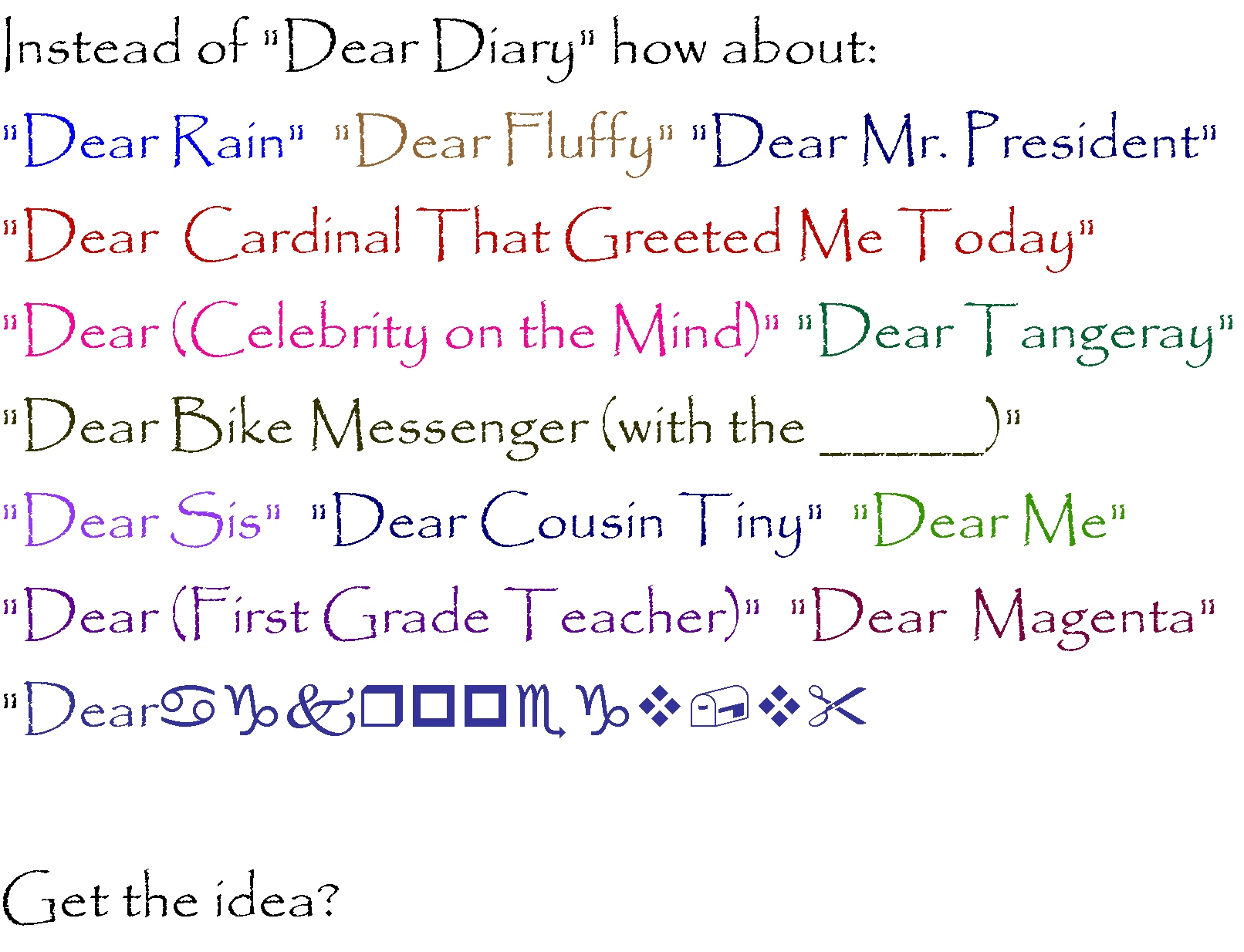
Diaries are another great way of journaling. Instead of beginning with “Dear Diary”, write to the person that was on your mind that day, or to rain, or a bird, or to the stranger who handed you a flower for no reason while riding on the subway.
Ideas and how you creatively develop them can come from anywhere; it’s the development of the idea that makes it unique. Writing your experiences also helps improve the quality of your writing. People respond to different triggers: some respond to sight, others to sound or fragrances. Recording how a particular odor made you feel, or how you felt about a sound can be applied to conveying similar sensations to the reader.
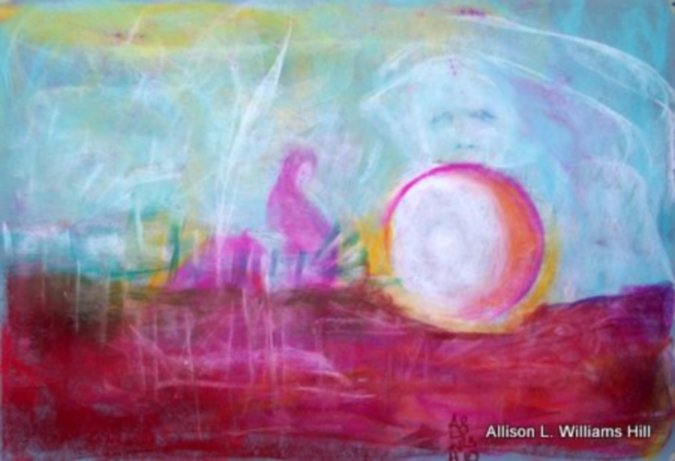
Spirit of the Island II by Allison L. Williams Hill
The journal does not have to be only text. Use colors, images, draw, or doodle. It may be a challenge to write feelings but you may be able to assign them a color or a texture with a brief summary about what it represents to you. I write more about this in my ebook "The Journey of Journaling."
2) Relax and Take Time to Sort Things Out
Prior to writing, concentrate on the experience at hand. Breathe deeply and attempt to relax and eliminate all that which may cause anxiety. One way to eliminate a persistent thought is to relax with pen and paper. Write all you think of that may be associated with the thought. Now that you have addressed it, place the sheet of paper aside. You can resume whatever the thought was later.

Spirit of the Island 1 detail 2 by Allison Williams Hill
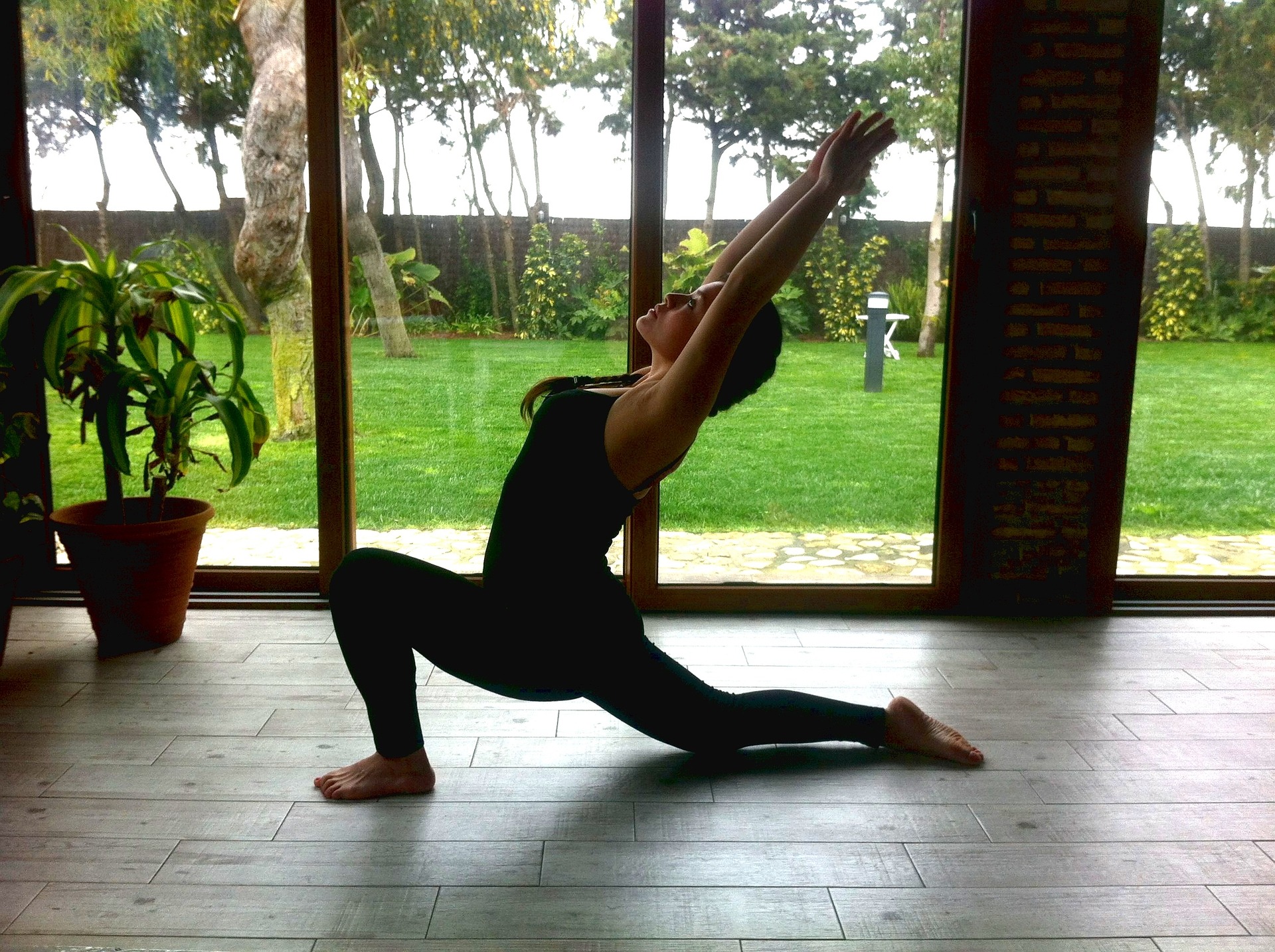
Yoga 7 Asana
Taking breaks may be helpful. Removing yourself from the work for a little while may bring a different point of view to the task.
3) Use Paper Instead of Your Computer or Laptop to Sloooow Down.

Write by hand. Use a pen or pencil, colored or not, and paper. The process between the brain and the hand changes when you write. The brain slows in its processing allowing more information to be captured. Recycle paper to write on the unused side or use a pad. Use color, pencil, whatever moves you. Write chunks on separate pieces of paper or write stream of consciousness with large breaks as if your thoughts ebb but do not completely cease. Remove, but save, or rearrange the pieces according to the flow you want to achieve. Pin, paste, or lay them on horizontal or vertical surfaces. Arrange them on walls if getting up and walking works for you. Add more content if necessary. When you feel you have completed your objective, take them down or collect them as you mark them in order, then type.
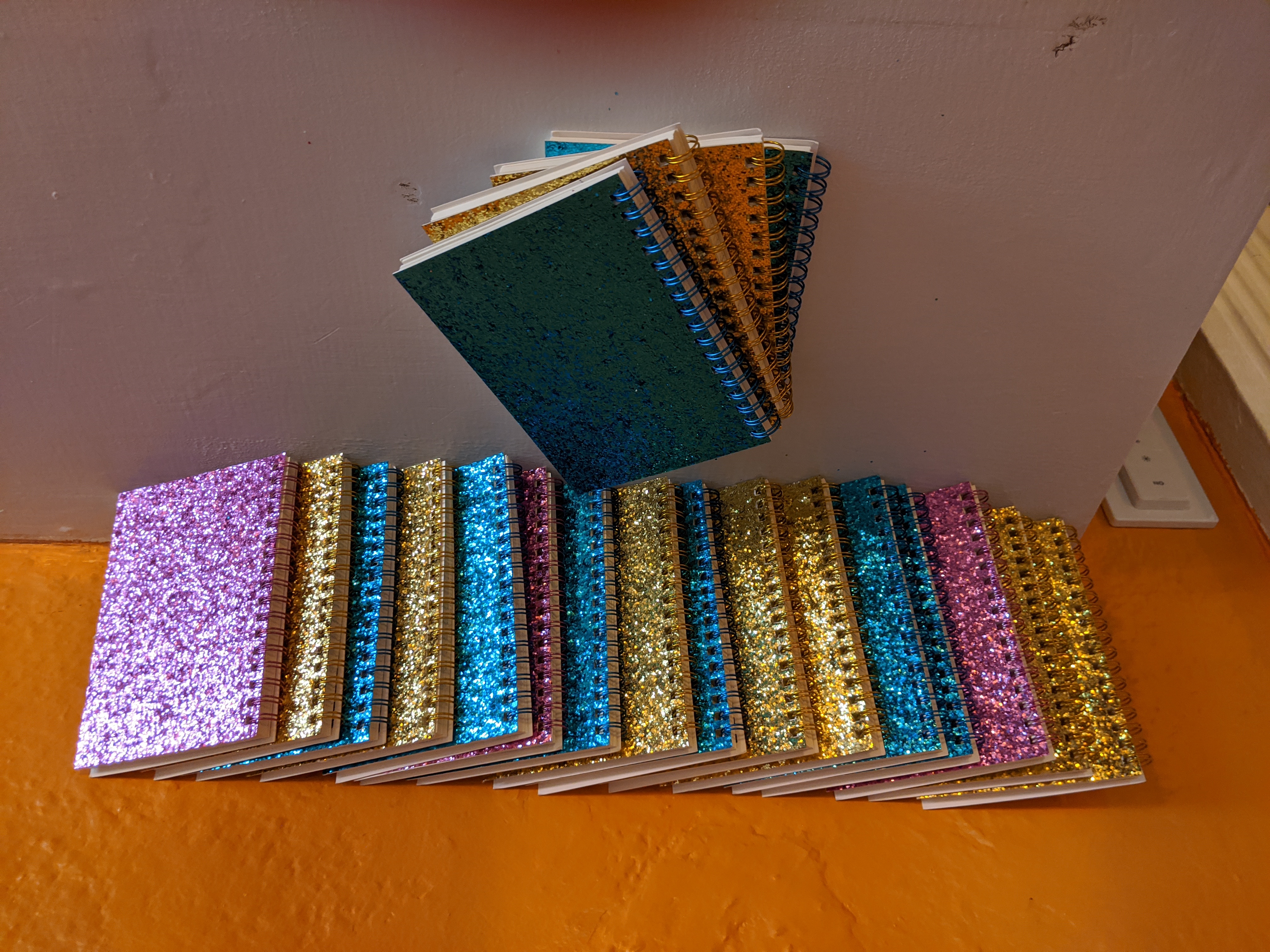
Glitter Notebooks by Allison Williams Hill
I carry around glitter notebooks I found in a dollar store. Really, they were for my niece but she was non-plus about them. They are the perfect size for a purse, available to collect thoughts. I saw these notebooks in a Dollar Tree store for a $1.00 each. I liked them and bought all that were left. They work well. I write everything in them and augmented them with colored index cards.
4) Surround Yourself With What Inspires You.
A workspace should inspire and not depress. Keep it organized and furnished with elements that encourage you to do your best. Items that evoke positive feelings, awards in ribbons or trophies, or pleasant reminders should be around you. Music, colors, scents, and lighting, among others, contribute to the type of environment recommended for creating good writing.

Partnership by Allison L. Williams Hill
Music surrounds and penetrates. People create a series of favorites for specific activities like exercising, domestic engineering, or other. Create one for those things that require a push to get moving on. Classical music with different movements allows time to flow into the process.
5) Change the Routine, If Necessary.
Some may have a “ritual” that has worked. If, however, it becomes uneventful, a change as simple as a walk or a hike would provide a change of scenery and activity that will remove you from what you have done so often that it may have become automatic.

The mind and body may disconnect; it may reach a point that you may not even remember what you were either doing or thinking at the time. Pay attention and that may stimulate brain pathways that, when connected with what you are doing, may kindle new thoughts. This will be the fodder of new ideas from which great articles are produced.
Music, mentioned above, can be changed to inject something different. If you love classical music, shake it up a bit with Latin or jazz or reverse it. Folk singing, performed by Buffy Saint Marie, Peter, Paul, and Mary, Pete Seeger and many others, were excellent works of art that galvanized one’s attention: the singers told interesting and compelling stories expressed as song.

Tranquil by Allison Williams Hill
Make the time to do something different and listen to a few. Another American genre is the blues. How the blues rose up from the roots of one experience of American life can be analogous to how a written piece grows and develops.
Read other authors. Choose something unlike anything you would have selected. If you are a fan of the late William F. Buckley’s writings, visit Calvin and Hobbes. Nothing literary there, but the ability of cartoonists to create a story, a beginning and an ending with images within such limitations, is underestimated. Consider how you will create the story as you read and you may have fun en route.
Links