The Banjo Lesson
he painting by Henry Ossawa Tanner, “The Banjo Lesson”, was created in 1893. My aunt and uncle had a copy of it in the kitchen of the home in Orangeburg, where my husband and I stayed upon our return to the US from the British Virgin Islands. Their home was filled with Black memorabilia. An older, experienced man gives lessons to a young child. I could see the old man plucking the banjo and the young boy playing the notes on the fingerboard. I could see the young boy plucking and the old man playing the notes on the fingerboard. I could see each playing parts of the same song and switching roles.
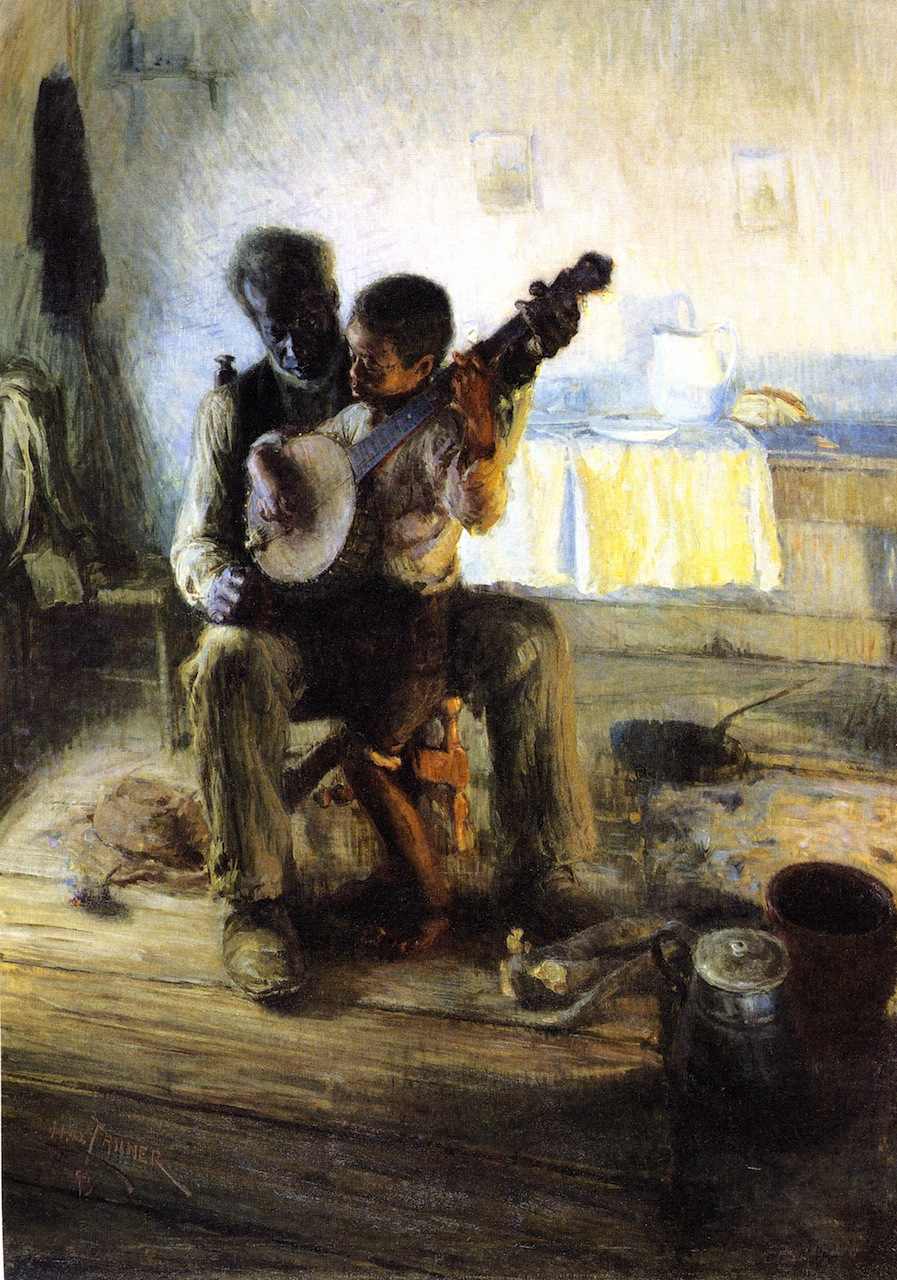
The Banjo Lesson by Henry Ossawa Tanner
Henry Ossawa Tanner was born in Pittsburgh, Pennsylvania, on June 21, 1859. Mr. Tanner was the first African-American artist to become internationally known. “His father was a minister and a bishop in the African Methodist Episcopal (AME) Church, and his mother, Sarah Tanner, was a former enslaved person who had escaped to freedom through the Underground Railroad. This blend of intellectual rigor and spiritual devotion would later shape Tanner’s artistic themes.” (1)
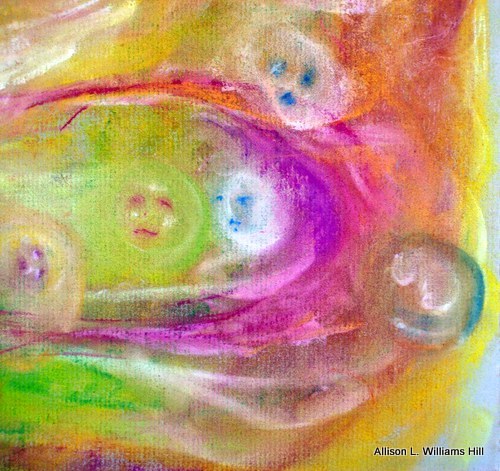
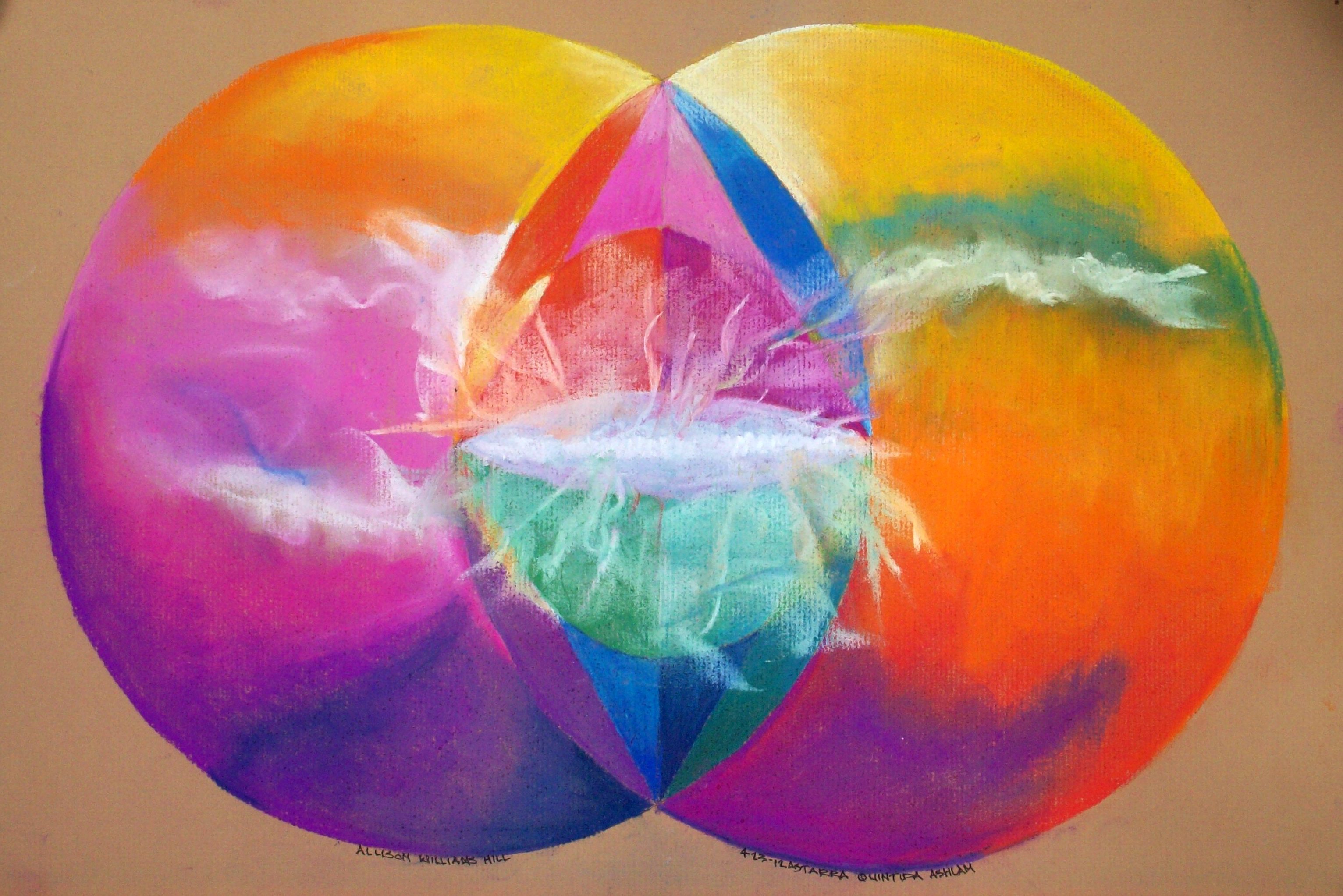
Nature detail 3 by Allison L. Williams Hill
The Banjo Lesson as Transmission of Knowledge
Playing the banjo was one of many unique abilities that the older man had and could pass on. He made it his own; perhaps he was self-taught. That happened a lot. Perhaps his father or another person taught him, organic knowledge transfer. And with that knowledge, he could have made what he was taught his own through improving on what he was taught through changing by adding to the knowledge and perfecting his technique.
Origin of the Banjo
Most people think the banjo originated in the southern United States, an instrument that became associated with country music, specifically, bluegrass. White country people strummed the banjo. The instrument originated on the continent of Africa (Alkebulan, the continent's original name). was designed and used by Africans. The body was made from a gourd. The enslaved made variations of the original instrument.
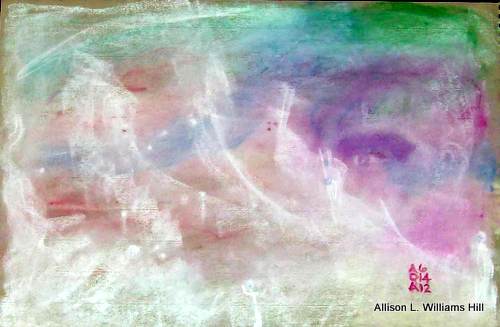
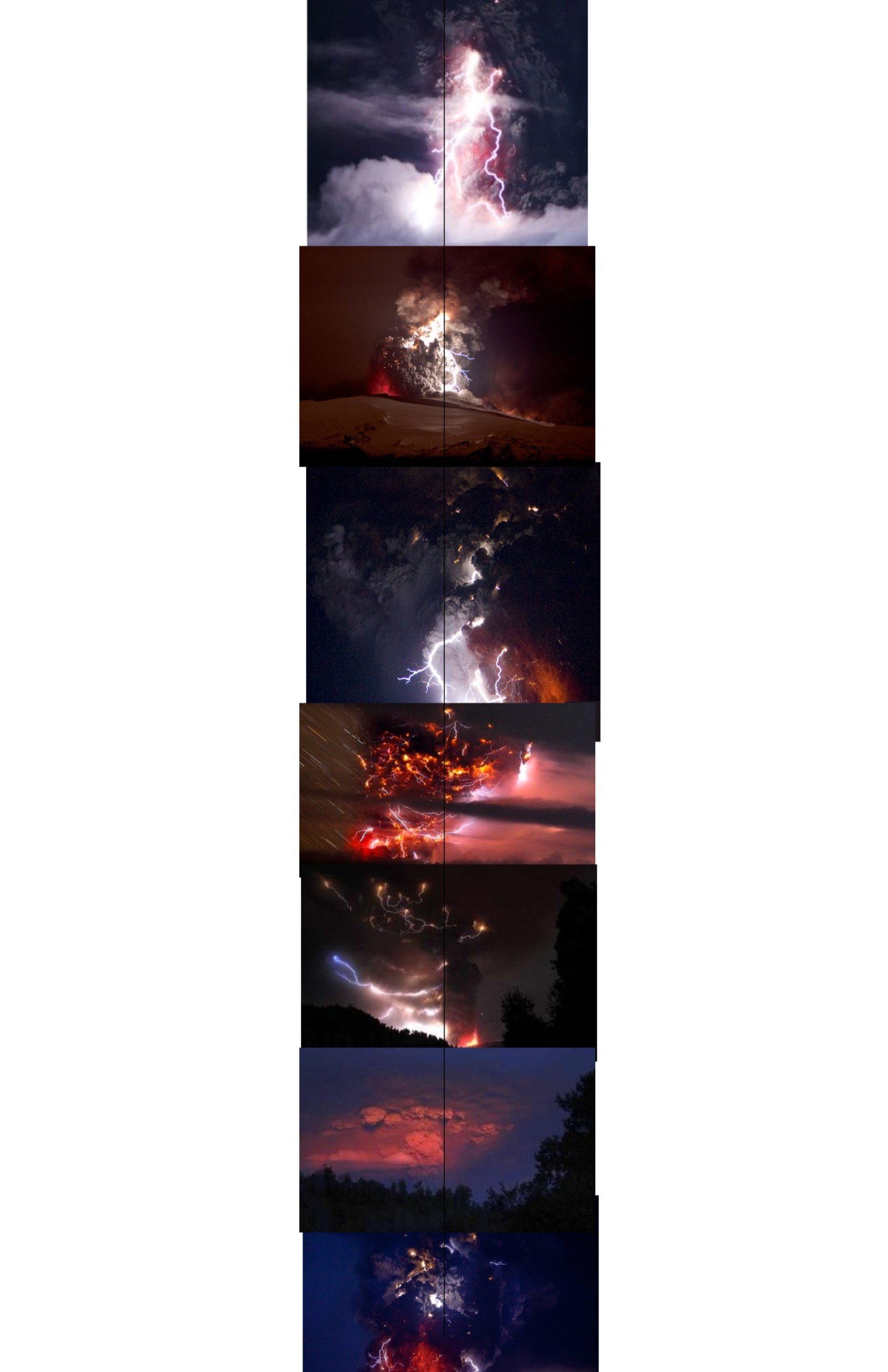
KD Soul portrait by Allison L. Williams Hill
The Banjo Lesson and Peace
The banjo lesson honored the teacher who taught him to play the instrument. He was adept at receiving the instructions and continuing.
The enslaved created music with what they had. They were able to perform and enjoy respite if the person who claimed ownership allowed it. That is such control throughout a being's life. If this was not painted to portray enslaved ancestors, it accurately displays the level of economic existence of many.
Making do with what families have is common in all efforts to improve one’s existence. All of us attempt to improve our existence in life; however, with the information currently available about wealth accumulation and retention for Black families, it is subtle but evident that the goal posts constantly change for the majority, moving them further back and challenging the ideals of the achiever.
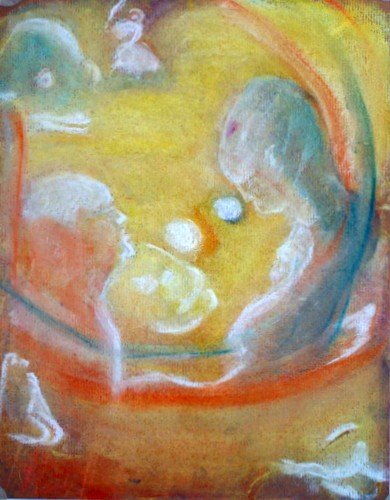
Merge with Krishna by Allison L. Williams Hill
In the New Testament Book of John Chapter 9, Marshall Smith, author of the Spiritual Anatomy books, used an example of Christ healing. Bartimaeus was blind since birth but received a correction from Jesus. He heard that Jesus was around and followed to gain an audience with Him.
“(Bartimaeus)’s response to learning that Jesus was near generated an excitement evidenced by his loud shouting for Jess to have mercy on him. He no doubt thought here was his one chance, his only hope for seeing again. His shouting created a troubling disturbance and was harshly told by those around Jesus to be quiet but he shouted all the more. He knew what he wanted, he wanted to see again, he had nothing to lose in creating the disturbance. Herein lies the first and most important secret of healing. The one seeking healing must have in mind exactly what they want. Their focus must be totally attuned to their healing. They must feel they have nothing to lose and everything to gain by reaching out for it.”(2)
To achieve any goal—such as a comfortable life, educating one’s children, supporting our seniors as they transition from caregivers to recipients, or improving our health—the desire for success must be strong and unwavering. Maintain a powerful conviction and ride this persistent wave, sometimes intersected by other waves of energy that challenge the mind and heart, to reach your objective, even in the face of laws, regulations, and other hurdles that may arise.
What if time and space did not provide the opportunities to play the banjo when he became a young man to support him or even profit from it, but provided time to perfect it to pass it to his son, who would pass it to his son- his grandchild, who would pass it to his son or daughter- the Intended One, the great grandchild?
I always had in mind that what one learned during one’s life was to be used in that life. My thoughts about that changed. Looking at this image, I thought that the knowledge of anything taught or learned by one may not be for use in that one’s lifetime, but passed on until it reaches the Intended One for use. Whether one learner or many learners made the knowledge their own, changing, improving, or even perfecting it. I heard/felt “That young boy was to learn how to play the banjo so the knowledge and the skill can be passed on to the Intended One, his great-grandson or daughter.”
The music emitted from a banjo played by the man who could have been enslaved or a sharecropper or a farmer, carried energy, color, emotion, and a story. That instrument may have survived to be presented to the Intended One. The banjo’s surface, when touched, would reveal that it was worn from different fingers that used it to soothe and celebrate.
Footnotes
1 “Henry Ossawa Tanner: The First Black American Artist to Gain Global Fame”,
Black Art Magazine https://blackartmagazine.com/insights/black-art-history/henry-ossawa-tanner/ Source: Smithsonian American Art Museum, Musée d’Orsay
2 Smith, Marshall L., Spiritual Anatomy Book I, The Dimensional Brotherhood Publishers, McCaysville, Georgia, p.89-90
Sign Up for Psychic Art Work!
When time permits, I intend to hold drawings to create
an intuitive visionary healing tape, or
a soul life reading, or
for the winners whose names are drawn for each.
To enter, your name and email address will be required. It will be added to a mailing list to receive updates about In-Vesica. In-Vesica will post the art work on this web site and in other publications.
Services (https://www.in-vesica.com.services.html) explains what is involved in creating these helpful tools. The images will be displayed at In-Vesica.
Of course, I collect your email and, thereafter, you will receive periodic updates on In-Vesica - spiritual development; health coaching; energetic healing; art and design, when projects will be launched, and what I eat (I'm kidding!).
Sign Up for Your Free Health History!
A health coach (or health counselor) is a wellness guide and supportive mentor. Together, we’ll work to achieve your goals in areas such as achieving optimal weight, food cravings, sleep and energy. Through working with me, you’ll develop a deeper understanding of the foods and lifestyle choices that work best for you and implement lasting changes that will improve your energy, balance and health. I practice a holistic approach to health and wellness, which means that we look at how all areas of your life are connected and affected. Does stress at your job or in your relationship cause you to overeat? Does lack of sleep or low energy prevent you from exercising? As we work together, we look at how all parts of your life affect your health as a whole.
I lead workshops on nutrition, and offer individual and group health and nutrition counseling on weight management, emotional eating, self-image issues to professional women, caregivers, and healers. I realized a dream to study at The Institute for Integrative Nutrition and it changed my life. Let me support you to change yours.
Get a free 50-minute Health History.
Go to In-Vesica Health for details.
Write for an appointment for a free health history.
We meet. You fill out the health history form. I wait while you fill out the health history. We discuss the health history information. I ask questions. You talk....
I listen.
And you will find out if the program can suit your needs to discover the food and lifestyle choices that best support you.
"Do All Things In-Vesica."
Links